How Long Does It Take to Build an Online Course?
A realistic timeline from first idea to launch day, and what makes it faster or slower.

Robert Virtue, Founder · Oct 26 2026 · 5 min read
ON THIS PAGE
Plan the result and outline
Write the lessons and materials
Record and edit
Set up and launch
What slows it down (and speeds it up)
Not sure what your course would look like?
Let’s find out together on a free call.
QUICK ANSWER
Most focused first courses take about 8 to 12 weeks to build, from first idea to launch, when someone works on it every week. A large, in-depth course can take 4 to 6 months. The size of the course matters less than you'd think. What usually decides the timeline is how quickly the expert can find time to record.
Expert Analysis
"How long will this take?" is usually the second question people ask about building a course, right after "Will anyone buy it?"
The honest answer depends on what you're building and how much time you can give it. But most courses go through the same four stages, and each one takes a fairly predictable amount of time. Here's what that looks like.
1. Weeks 1 to 2: Plan the result and the outline
Everything starts with one question: what will students be able to do when they finish? Once that's clear, you map out the steps it takes to get there. Those steps become your modules.
This stage moves quickly because you already know the material. Most of the work is deciding what to leave out. Beginners need a clear path, not everything you know.
By the end of week two, you should have:
One sentence describing the result students get
A list of 5 to 7 modules, in the order students need them
A rough idea of who the course is for and what it will cost
2. Weeks 2 to 4: Write the lessons and materials
Next comes the content for each lesson: talking points or scripts, plus anything students use along the way, like checklists, templates, worksheets or quizzes.
Do this before you record anything. When every lesson is planned on paper, recording becomes explaining, not figuring it out on camera. It's the biggest time saver in the whole process.
3. Weeks 4 to 8: Record and edit
This is where most courses slow down. Recording takes energy, a quiet space and a block of free time, which are hard to find when you're running a business or working full-time.
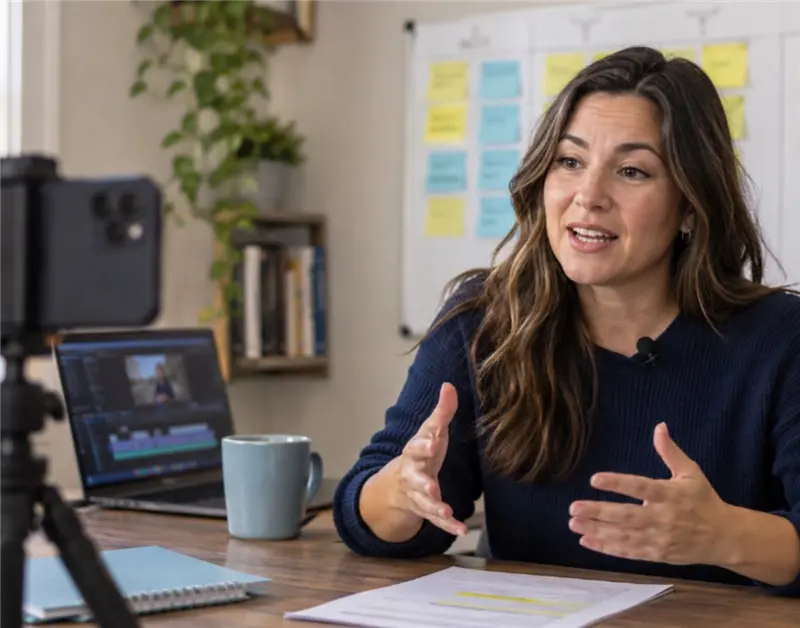
You don't need a studio. A phone or webcam, a decent microphone and good light are enough. Your first few lessons will probably feel awkward. That's normal, and it gets easier fast.
Editing can happen alongside recording. If someone else handles it, you can keep recording while finished lessons get cleaned up.
4. Week 8 and on: Set up the platform and launch
While lessons are being edited, the course platform gets built: lesson pages, a checkout, welcome emails and a simple sales page.
Then you launch, often to a small founding group first. That lets you collect feedback and testimonials and fix anything confusing before you open it up to everyone.
5. What slows a course down
Recording keeps getting pushed back. This is the most common delay by far.
Chasing perfect. Reshooting lessons over small mistakes can double the timeline.
Building everything at once. A 20-module course takes far longer than a focused first version.
Figuring out the tech alone. Platforms, payments and emails can eat weeks if you're learning as you go.
We've seen this firsthand. Course builds run months past plan, and almost all of that extra time was spent waiting on recording, not on planning or writing.
6. What speeds it up
Having the lessons scripted for you, so you only have to record
Batch-filming several lessons in one or two long sessions
Launching a shorter first version of 3 to 7 modules and adding more later
Setting a deadline for each module, not just for the whole course
Getting help with editing and tech, so your time goes into the part only you can do
Where most experts get stuck
Most people who start a course don't stall because they lack knowledge. They stall somewhere between the outline and the last recording.
That's the part we handle. We plan the course with you, write the lesson scripts, set up the platform and keep things moving week by week. You bring the expertise and press record.
CONTRIBUTOR SPOTLIGHT
Meet the Author
Written by Robert Virtue
Founder & Principal Curriculum Architect
Robert is the founder of Course Crafters Online. He works one-on-one with tradespeople, coaches and business owners to turn what they know into online courses, from the first strategy call to launch day.
READY TO LAUNCH
Ready to Build Your Course?
Book a free call and let’s talk about your idea.
Direct 1-on-1 strategy • No generic roadmaps • 100% confidential